Workflow guide
Fur Brushes for Blender
Fur sculpting is not only about drawing many thin lines. Good fur needs direction, clumps, layered breakup and controlled detail scale.
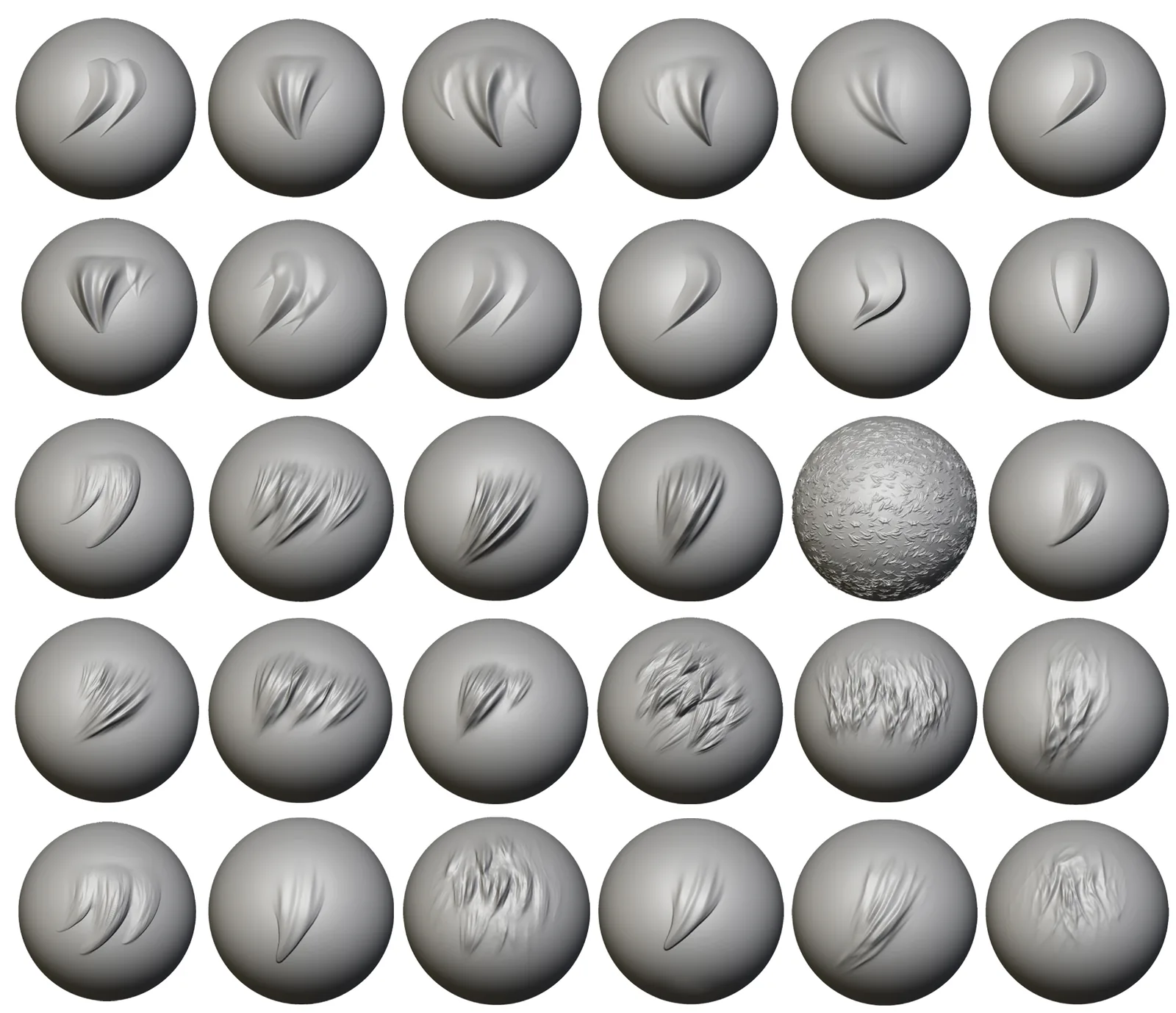
Fur brush previews
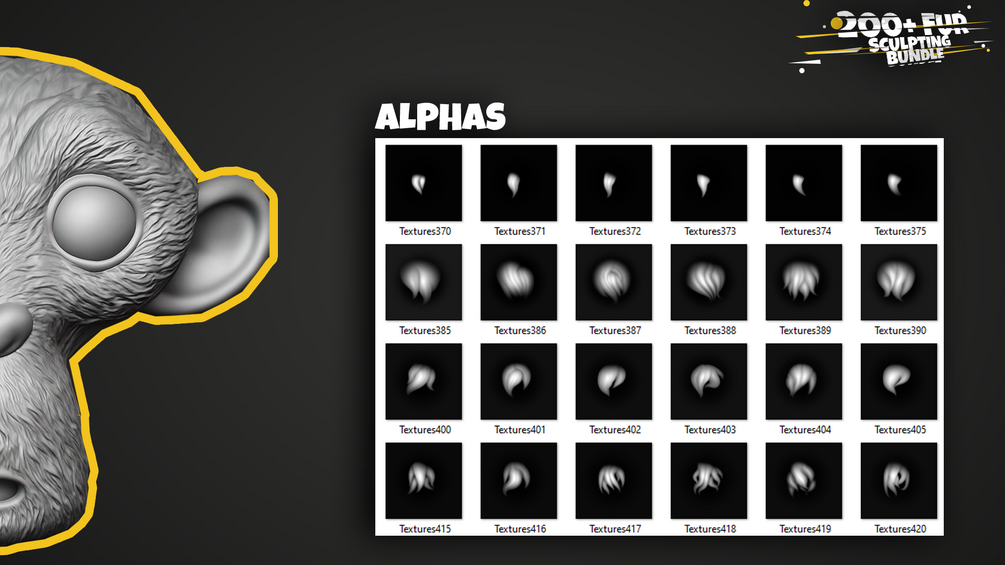
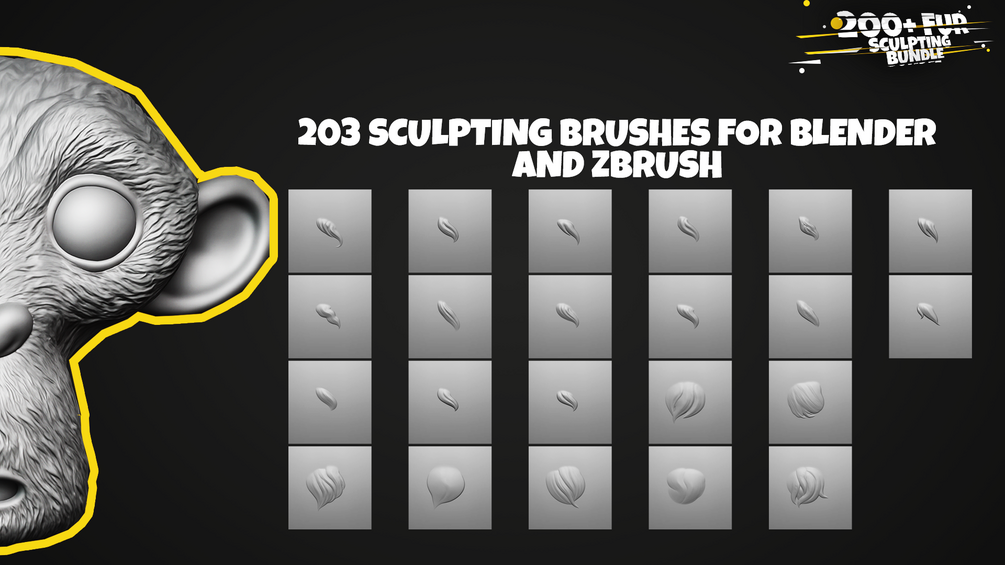
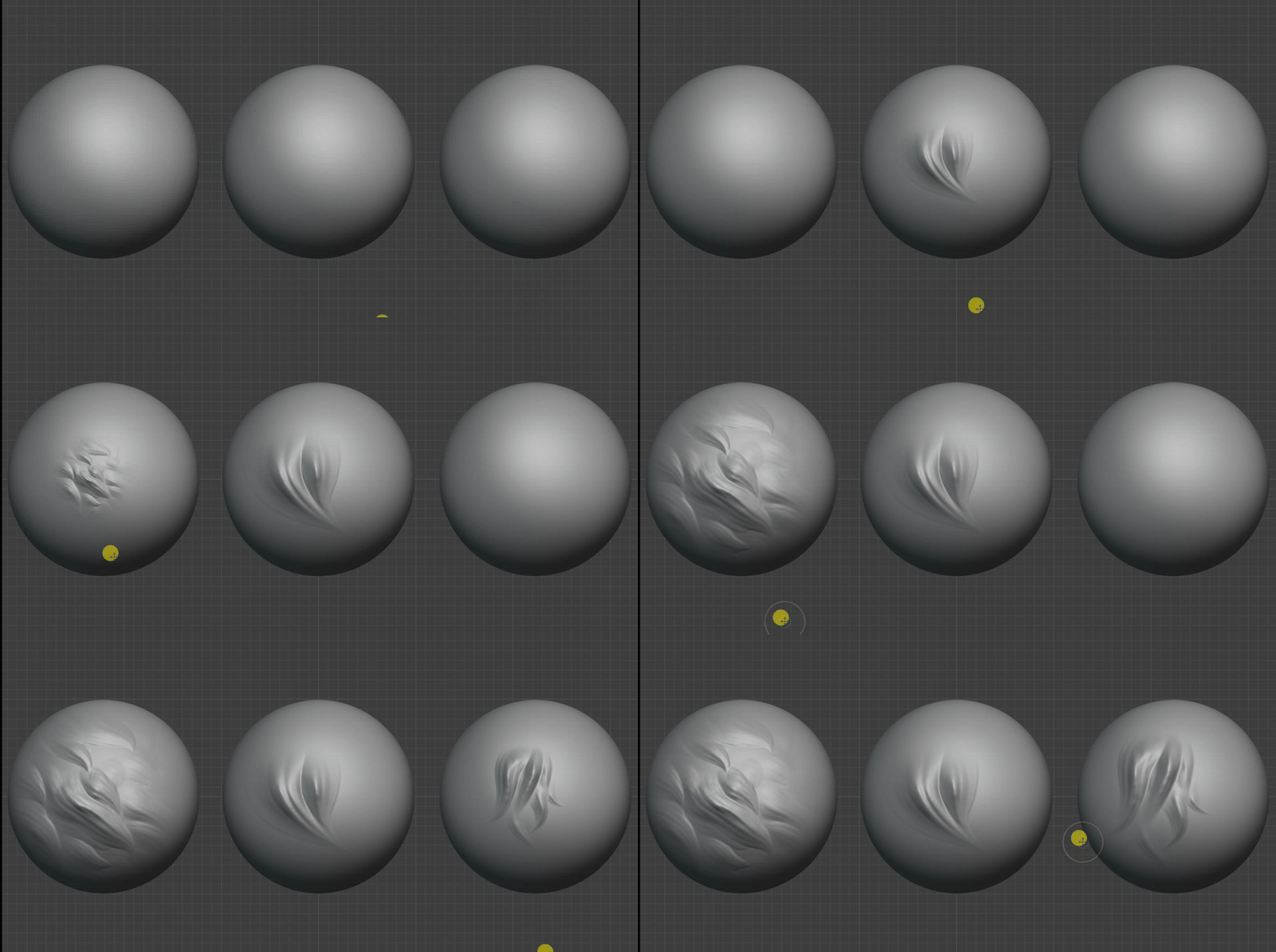
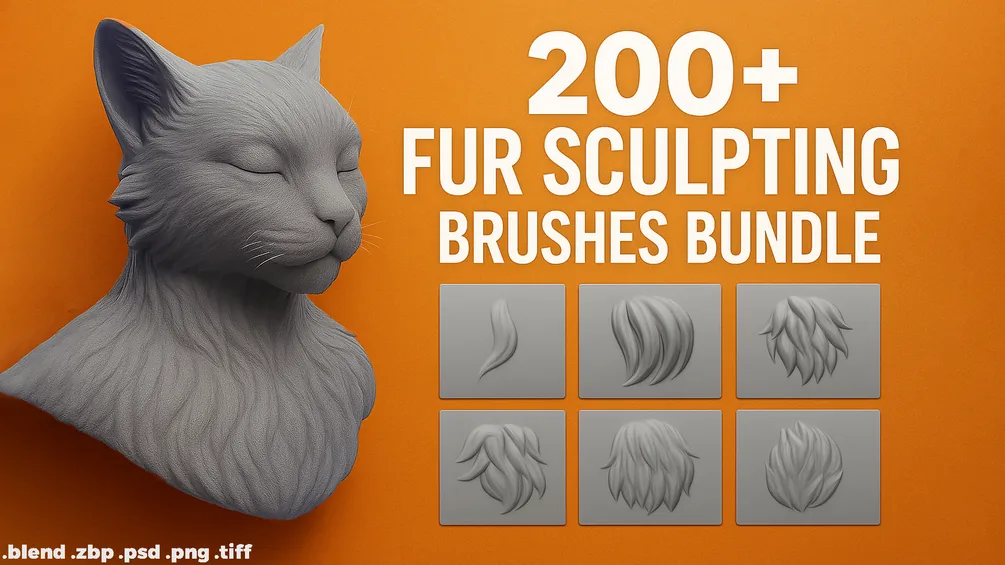
Fur detail reads better when the page shows actual brush behavior, not only text. These previews show short fur, clumps, layered strand breakup and alpha sheets.
Quick answer
Use fur brushes after the main animal, creature or clothing silhouette is already sculpted. Start with broad fur flow, then add smaller clumps, then finish with fine breakup.
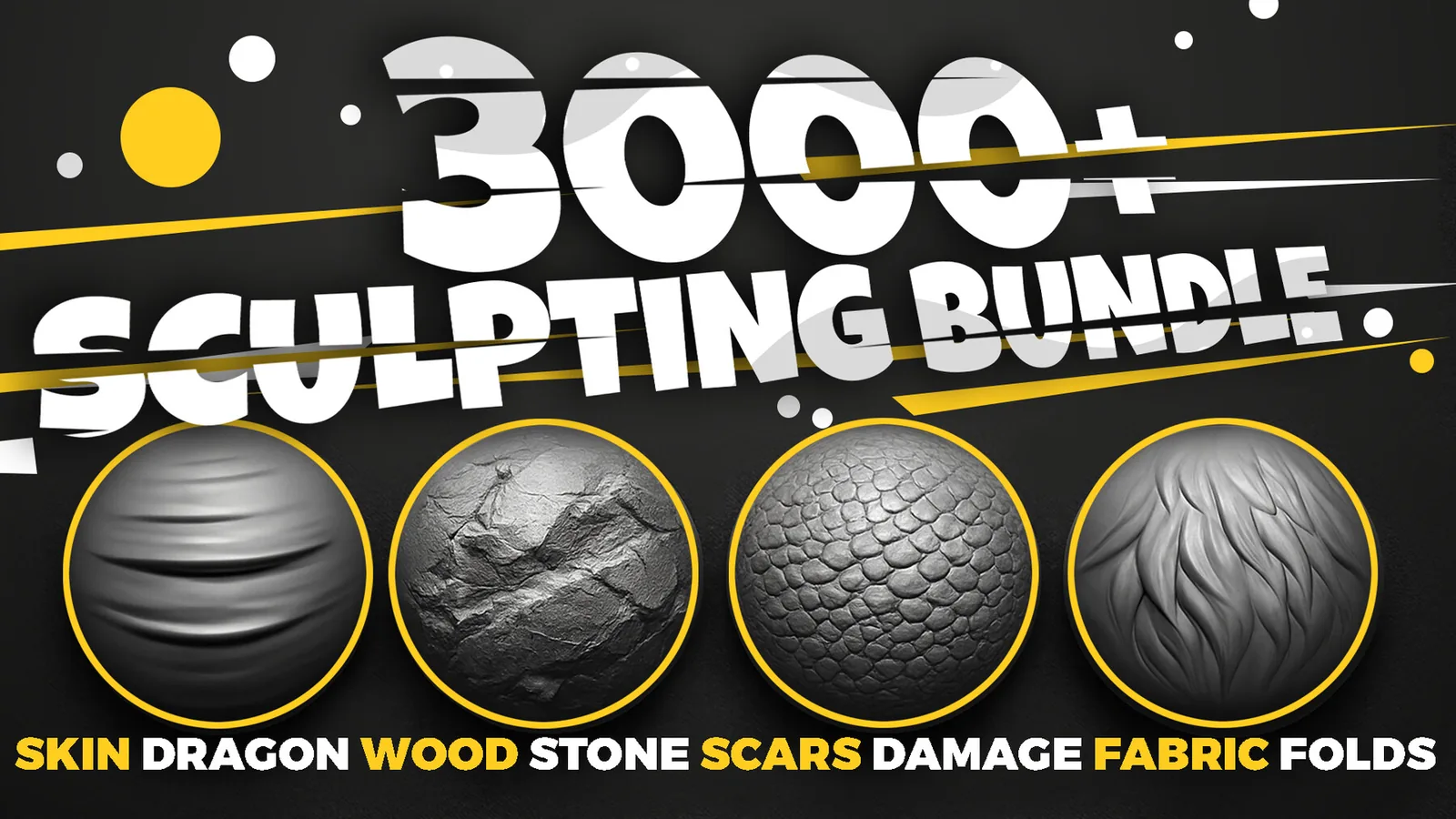
For a dedicated fur workflow, use Fur Sculpting Brushes for Blender and ZBrush. If your asset also needs skin, scars, fabric, rocks, wood or creature scales, use the 3000+ Sculpting Brushes Bundle.
Fur sculpting workflow
Best products for fur and hair detail
Common mistakes
The biggest fur mistake is using small detail too early. If the large fur direction is weak, tiny strand texture will only make the sculpt noisy. Build the form first, then use fur alphas as controlled surface detail.
Another mistake is using one alpha at one scale across the whole model. Good fur detail changes scale between face, neck, chest, paws, cloth trim and creature surfaces.
Official source
For the underlying sculpt-editing behavior brushes rely on, see the Blender Manual - Sculpt Editing.
FAQ
Can fur brushes replace hair particles?
No. Sculpted fur brushes are best for surface forms and clumps. Hair particles or cards can still be useful for final render hair.
Are fur alphas useful for ZBrush?
Yes. Fur alphas can be used in ZBrush-style alpha workflows and in Blender workflows depending on the pack format.
What pack should I buy first?
If you only need fur, start with a focused fur brush pack. If you need several material types, the 3000+ bundle is better value.